
Essential Destination Profile: Ratti Gali Lake
About Ratti Gali Lake
The Fabled Glacial Wonder of the Western Himalayas
Perched high in an alpine glacial amphitheater at an elevation of 3,700 meters (12,139 feet) in the upper reaches of Neelum Valley, Ratti Gali Lake is universally hailed as one of the most mesmerizing freshwater alpine lakes in South Asia. Fed directly by glacial meltwater cascading from jagged surrounding ridgelines, the lake displays an astonishing spectrum of colors—shifting throughout the day from radiant turquoise and aquamarine under midday sunlight to a deep, brooding cobalt-blue as twilight descends.
The lake draws its evocative name ('Ratti Gali') from the vibrant reddish rock formations and the profusion of scarlet red alpine poppies (Papaver), purple primulas, and yellow buttercups that carpet the surrounding meadows from late June through August. Unlike roadside viewpoints, Ratti Gali retains a pristine wilderness sanctity, surrounded by soaring ridgelines exceeding 4,500 meters that naturally divide the Neelum Valley of Azad Kashmir from the Kaghan Valley of Khyber Pakhtunkhwa.
The Dowarian Trailhead & Alpine Stream Gorge
Access to Ratti Gali Lake branches off the main Neelum Valley Road at the riverside village of Dowarian (1,615 m), located 106 kilometers north of Muzaffarabad. From Dowarian, travelers embark on a rugged 18-kilometer 4x4 mountain jeep track that ascends over 1,700 vertical meters through the roaring Ratti Gali Nullah gorge to Base Camp.
The Journey: From Roaring Gorges to Flower-Strewn Basins
Traveling to Ratti Gali Lake is an exhilarating multi-stage wilderness excursion:
- Stage 1: 4x4 Jeep Ascent from Dowarian: Transfer into heavy-duty 4x4 mountain jeeps operated by licensed local drivers. The 18-kilometer unpaved gravel trail winds through dense hazelnut and pine groves, splashing across cold glacial streams and climbing sheer rock shelves for approximately 2 to 2.5 hours.
- Stage 2: Ratti Gali Base Camp (3,400 m): The jeep track terminates at a wide, green pasture basin where local hospitality operators erect glamping dome tents and mountain tea stalls. Travelers pause here for hot chai, local pakoras, and acclimatization before the final ascent.
- Stage 3: The Alpine Hike to the Lake Rim (3,700 m): From Base Camp, an invigorating 2.5-kilometer uphill trail winds through undulating flower meadows. The hike takes between 45 to 75 minutes depending on fitness. For children, elderly travelers, or those feeling the altitude, gentle mountain horses with local handlers are readily available at Base Camp.
- Stage 4: Standing at the Glacial Shoreline: Cresting the final moraine ridge reveals the immense cobalt lake stretching before you, flanked by jagged vertical cliffs reflecting into the crystal waters. On warm sunny afternoons, drifting ice sheets often float serenely across the surface.
Suggested 2-Day Ratti Gali Glamping Itinerary
- Day 1: Keran / Muzaffarabad to Ratti Gali Base Camp: Depart morning along Neelum Valley Road to Dowarian. Board 4x4 jeeps for the dramatic 2-hour ascent up Ratti Gali Nullah. Arrive at Base Camp (3,400 m) by early afternoon; check into dome tent. Afternoon hike up to Ratti Gali Lake to photograph the golden hour sunset glow. Return to Base Camp for a hot traditional dinner and stargazing beneath unpolluted Bortle-1 night skies.
- Day 2: Sunrise Lakeshore Stroll & Return to Neelum Valley: Early morning walk to the lake rim to watch the sunrise illuminate the surrounding snow ridges. Enjoy quiet reflection by the glacial shore before descending to Base Camp for breakfast. 4x4 jeep descent back to Dowarian; continue onwards to Sharda, Arang Kel, or return to Muzaffarabad.
Seasonal Window & Weather Matrix
| Season | Operating Months | Temperatures (Day / Night) | Trail & Lake Conditions |
|---|---|---|---|
| Spring Thaw | Late June – Early July | 16°C / 2°C | Jeep track newly opened by excavators; massive snow walls along trail; lake partially ice-covered. |
| Peak Bloom Summer | July – August | 22°C / 6°C | Optimal season; vast wild poppy and primula blooms; clear trails; warm sunny afternoons; glamping fully operational. |
| Golden Autumn | September – Early October | 14°C / -2°C | Crisp, crystal-clear blue skies; deep turquoise waters; fading golden grasses; sub-zero night frosts. |
| Winter Snowbound | Mid-October – May | Sub-zero / -15°C | Deep snowpack covers the basin; jeep track impassable; accessible only to technical ski-mountaineering expeditions. |
Where to Stay: Base Camp Glamping & Amenities
Accommodations at Ratti Gali are centered at the Base Camp (3,400 m), where seasonal eco-campsites offer private waterproof dome tents, foam mattresses, warm sleeping bags, and heavy quilts. Basic running water and shared camp washrooms are provided. Hot local meals (lentil daal, chicken karahi, chapati, and tea) are freshly prepared by camp cooks. Note: There is no electricity grid; camps operate solar lanterns or small generators in the evenings.
Key Highlights & Geographic Significance
Tours & Treks in Ratti Gali Lake
Handcrafted guided departures, private 4x4 road journeys, and alpine trekking routes exploring Ratti Gali Lake and the wider Azad Kashmir mountain corridor.
 Tour Package 5 Days / 4 Nights (from Muzaffarabad or Islamabad)
 Gurez Valley (Kel to Taobat) Upper Neelum Tour
Embark on an exhilarating 4x4 expedition through the pristine frontier of Upper Neelum, from the fairy-tale plateau of Arang Kel along the roaring Kishanganga River to the untouched timber village of Taobat.
 Tour Package 1-Day Day Trips to 3-Day Weekend River Expeditions
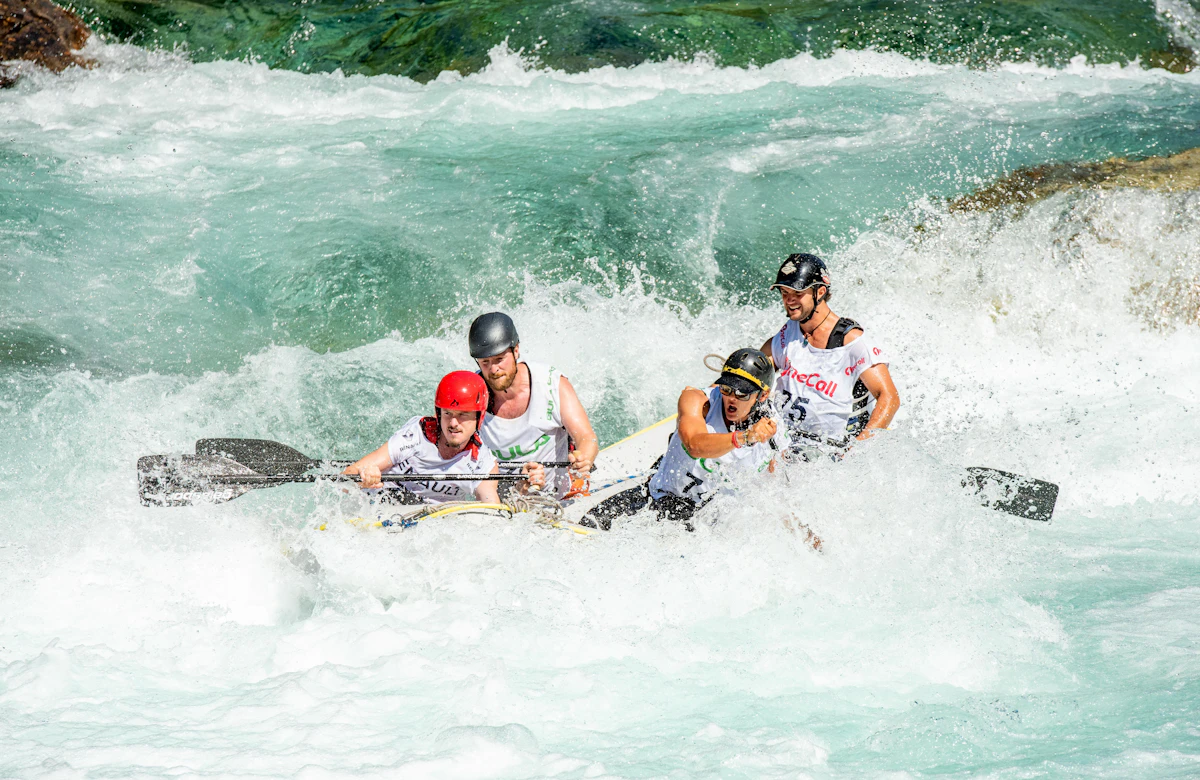
 Whitewater Rafting in Pakistan: Glacial Rapids on Kunhar, Indus, Neelum & Swat Rivers
Conquer exhilarating Grade II to IV+ glacial rapids on Pakistan's premier river runs: the foaming Kunhar River in Kaghan, the emerald Swat River, pine-lined Neelum River in Kashmir, and massive big-water gorges of the upper Indus near Skardu.
 Trekking Route 1 to 2 Days (Day hike or overnight meadow stay)
 Arang Kel Trek & Cable Car (Neelum Valley, 2,554m)
Ascend to the breathtaking 'Pearl of Neelum Valley': experience the dramatic aerial cable car over the roaring river gorge, followed by a scenic pine-shaded alpine hike to the emerald wooden village plateau of Arang Kel (2,554m).
Trekking Route 5 to 6 Days (Chillum Chowki to Minimarg & return) Burzil Pass Historical Caravan Trek (Astore to Kashmir, 4,100m)
Trek the legendary 2,000-year-old Silk Road caravan route crossing Burzil Pass (4,100m): traverse from Chillum Chowki in Astore across windswept alpine tundras into the secret paradise of Minimarg, Rainbow Lake, and Kamri.
Design a Custom Ratti Gali Lake Itinerary
Have specific dates, private group preferences, or combining multiple valleys across Azad Kashmir? Our mountain logistics desk crafts tailored private 4x4 departures.
- Private 4x4 Toyota Prado / Land Cruiser convoy
- Certified local mountain guides & porters
- Curated heritage lodges & boutique camps
Frequently Asked Questions About Ratti Gali Lake
When does Ratti Gali Lake open for tourists each year?
The 4x4 jeep track from Dowarian to Ratti Gali Base Camp typically opens in late June or early July, once winter snow clears from the mountain tracks. It remains fully accessible through July, August, and September, closing in mid-to-late October when winter snowfall returns.
Can I drive my own car to Ratti Gali Lake?
No. Normal passenger cars (sedans, hatchbacks) can only drive along the paved Neelum Valley Road up to Dowarian village. The 18-kilometer track from Dowarian to Ratti Gali Base Camp is an extremely steep, rocky, unpaved terrain strictly suitable only for local high-clearance 4x4 mountain jeeps.
Can elderly people or young children visit Ratti Gali Lake?
Yes! While the 4x4 jeep ride is bumpy, the final ascent from Base Camp to the lake rim (approx. 2.5 km) can be completed entirely on gentle mountain horses led by experienced local wranglers, making the lake accessible for children and senior family members.
How cold does it get at Ratti Gali Lake?
Due to the 3,700-meter elevation, weather changes rapidly. Even in July and August, daytime temperatures average 18°C to 22°C with brisk winds, while night temperatures at Base Camp drop to 4°C to 7°C. In September and October, night temperatures frequently fall below 0°C. Always bring thermal base layers, a warm fleece, and a windproof jacket.
Is swimming permitted in Ratti Gali Lake?
No. Swimming is strictly discouraged and unsafe. The lake is fed directly by glacial ice melt with near-freezing water temperatures, posing severe hypothermia risks. Visitors should respect the pristine alpine environment and avoid contaminating the water.
Is mobile network available at Ratti Gali Lake?
Mobile signal is limited in the deep mountain basin. SCOM provides sporadic coverage at certain high vantage points along the trail, but you should expect to be largely off-grid and enjoy the undisturbed natural silence.